
Chocolate Packaging: How to Protect, Present, and Gift Your Chocolates
From compartments and inserts to outer boxes and gifting, develop chocolate packaging around the assortment, the occasion, and the way the finished pack will be handled.
By Synthesis Communications · Mumbai

Quick answer
The short answer.
Good chocolate packaging brings product protection, clear presentation, and an appropriate gifting experience together. Start with the actual assortment and its inner packaging, then develop compartments, inserts, and an outer box around the products, packing requirements, and occasion. A presentation box alone should not be assumed to control temperature or guarantee freshness.
A box of chocolates is often chosen for more than the chocolates themselves. It might be a thank-you, a celebration, a corporate gift, or a small indulgence.
Before anyone tastes the first piece, the packaging has already introduced the experience.
The proportions of the box, the arrangement inside, and the way the lid opens all influence that introduction. But appearance is only one part of the brief. The packaging must also accommodate the chocolates properly, support practical packing, and suit the way the finished box will reach its recipient.
Good chocolate packaging brings product protection, clear presentation, and an appropriate gifting experience together. It starts with the actual assortment—not simply an attractive empty box.
Start with the chocolates, not the box dimensions
A uniform collection and a mixed assortment create different packaging requirements.
Pieces may differ in height, width, shape, decoration, or individual wrapping. Designing around an approximate piece count alone can leave some compartments too tight and others unnecessarily loose.
Before developing the outer box, establish:
For example, a twelve-piece assortment does not automatically need twelve identical spaces. The layout should follow the products it contains.
A physical sample of the complete arrangement helps reveal issues that a flat drawing can miss.
- 01The dimensions of each chocolate in its final packed condition.
- 02The number of pieces and arrangement of the assortment.
- 03Any individual wrappers, cups, trays, or other inner packaging.
- 04Clearance around raised decoration and taller pieces.
- 05How the chocolates will be loaded and removed.
- 06Whether the box is intended for retail, gifting, or delivery.
Give every chocolate a considered place
Compartments and inserts help organise the assortment and limit unwanted movement within the pack.
They also shape what the customer sees when the box opens. A deliberate arrangement can make a collection easy to understand, while an overcrowded layout can make individual pieces harder to distinguish and remove.
The right solution depends on the assortment. It might involve a supporting insert around individually packed chocolates, a divided layout, or an outer box developed around a separate inner tray.
The important questions are practical:
Does each piece have enough space?
The layout should accommodate the final product without pressing against delicate details.
Can the customer remove it comfortably?
A secure arrangement should not make the chocolates awkward to access.
Does the arrangement remain coherent across variants?
If different assortments share one outer box, check that each configuration works rather than assuming a single insert will suit everything.
Any component intended to touch the chocolates directly needs to be selected and verified for that use. The outer presentation structure and the food-contact packaging should be considered together, but they are not interchangeable.
 View this project →
Choose an outer box that suits the occasion
The most appropriate chocolate box is not necessarily the heaviest or most elaborate. It is the one that fits the product, purchase occasion, and operational requirements.
Folding cartons
Folding cartons are worth considering when flat storage, printed communication, and efficient handling are priorities.
A carefully proportioned carton can provide a strong branded exterior around an appropriate inner pack. Board choice, print, finishing, and fit can create a refined result without relying on a bulky structure.
 View this project →
Rigid boxes
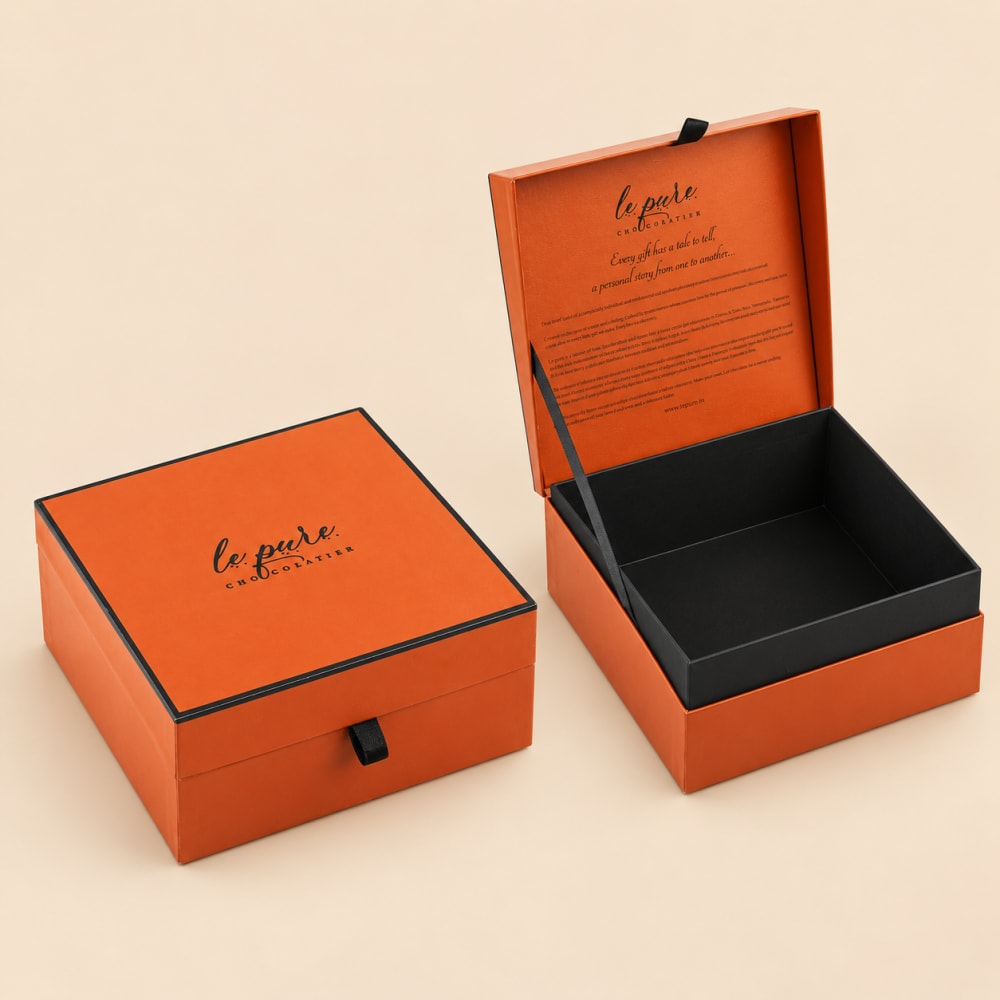
Rigid boxes offer a more substantial presentation and can suit premium assortments, special gifts, and collections where the opening experience is central.
Lift-off lids, hinged constructions, or drawer-style formats create different ways to reveal the contents. Each should be assessed alongside the insert, loading method, storage space, and intended handling.
 View this project →
Custom structures
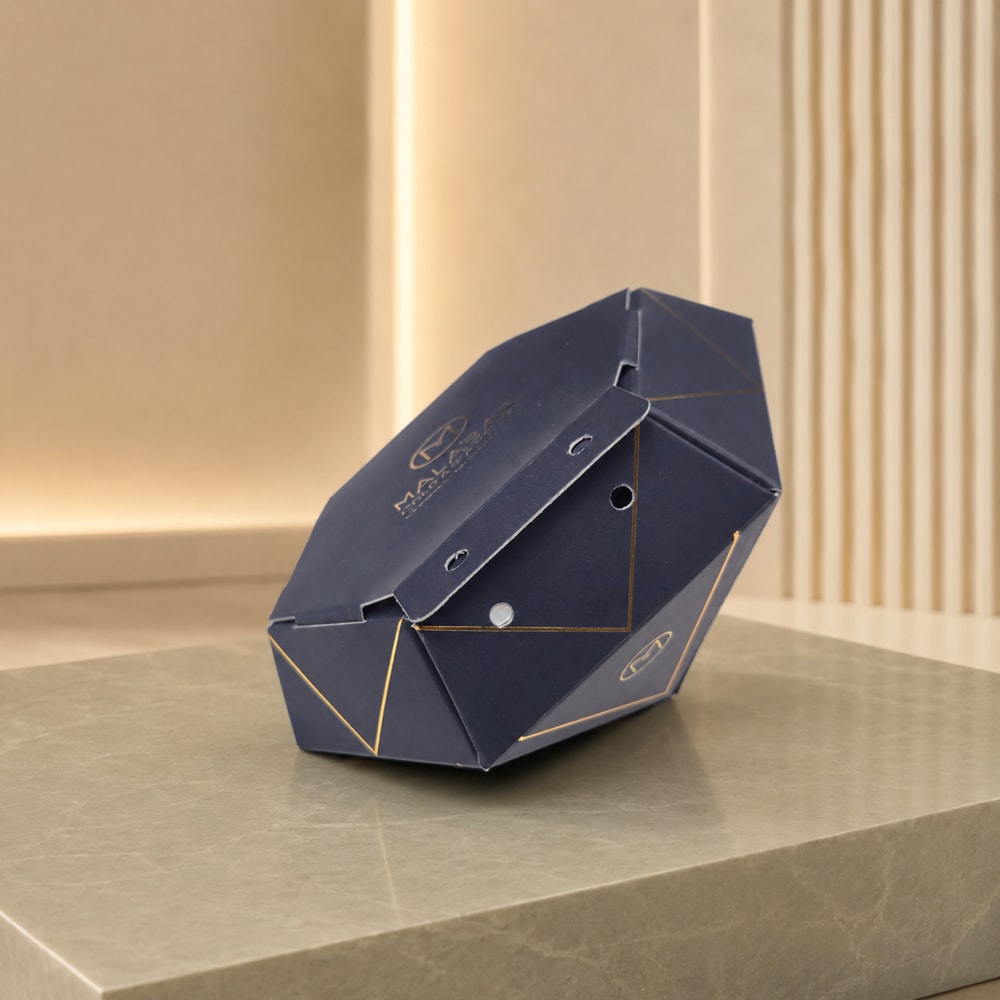
An unusual assortment or distinctive gifting brief may need a more tailored approach.
However, extra layers, compartments, and opening steps should have a purpose. A structure that looks impressive but is difficult to pack or use can add complexity without improving the experience.
 View this project →
Make the presentation feel like your brand
Chocolate packaging should communicate the character of the brand rather than depend on a generic idea of luxury.
Colour, typography, surface texture, and finishing can establish a recognisable identity. The interior should continue that identity through its arrangement, proportions, and visual balance.
A restrained design can still feel special. A precise fit, controlled colour palette, and clearly presented assortment may contribute more than several competing decorative effects.
Printed information also deserves a deliberate place. A flavour guide, brand story, or gift message should be easy to find without obscuring the chocolates or creating unnecessary loose components.
For a range with different assortment sizes, retain a consistent design language while adjusting the structure to each configuration. Consistency should not mean forcing every collection into the same dimensions.
 View this project →
Design the gifting experience as a complete sequence
Gift packaging has to work for both the person giving it and the person receiving it.
Consider the full sequence: selecting the gift, carrying it, presenting it, opening it, and accessing the contents.
The closure should feel dependable. The lid or drawer should open comfortably. Any message card should have an intentional location. If a carry bag or sleeve is included, it should fit the finished box rather than feel like a separate decision.
For corporate or personalised gifting, identify the elements that change between orders early. A message card or sleeve may provide a place for personalisation while preserving the core brand presentation.
Where continued use is part of the brief, consider whether removing the inner components leaves a practical box. That should remain a genuine design opportunity—not a reason to add unnecessary material.
 View this project →
Plan for packing and delivery—not just the photograph
An attractive sample is only part of a successful chocolate-packaging project.
Check how the empty boxes will be stored, how the assortment will be loaded, and how the finished packs will be handled. Assess the complete packed unit, including any cards, sleeves, bags, or transport packaging.
An outer presentation box should not be assumed to provide temperature control, extend shelf life, or replace suitable inner packaging. Those requirements need to be addressed separately with the chocolate producer and relevant packaging specialists.
The presentation box must work within that wider system.
How Synthesis Communications approaches chocolate packaging
Here at Synthesis Communications, we develop custom packaging that brings structure, inserts, print, finishing, and presentation together.
For chocolate packaging, that means considering the assortment, its inner-pack arrangement, the occasion, and the practical requirements before selecting the outer format.
We can explore folding cartons, rigid gift boxes, supporting inserts, and printed components as parts of one coordinated presentation. The aim is not to make every chocolate box more complicated. It is to make the choices feel appropriate to the product and unmistakably connected to the brand.
A useful starting brief includes the final assortment, product samples or accurate dimensions, quantities, inner-pack requirements, delivery expectations, and the impression you want the gift to create.
The chocolates should be the centre of attention. The packaging should make their introduction feel considered.
Frequently asked questions
What should chocolate packaging include?
Depending on the product, chocolate packaging may combine suitable inner wrapping or trays, compartments or supporting inserts, an outer box, and printed information. The components should be developed around the final assortment and its handling requirements.
Are rigid boxes or folding cartons better for chocolates?
Neither is universally better. Folding cartons can suit flat storage and efficient handling, while rigid boxes can support a more substantial gifting presentation. The decision should consider the complete pack, quantity, storage, and customer experience.
Why are compartments useful in chocolate boxes?
Compartments help separate and organise the assortment, limit unwanted movement, and give each piece a clear position. Their dimensions should suit the actual chocolates and allow comfortable removal.
Does a premium chocolate box keep chocolates fresh or prevent melting?
A premium appearance does not establish freshness protection or temperature control. Those requirements must be addressed through the appropriate inner packaging, storage, and distribution arrangements.
About this guidance
Packaging insight from Synthesis Communications.
Synthesis Communications is a Mumbai-based packaging company working across structural development, materials, print, finishes, sampling, and production. Learn about the company and its experience.
Continue from here
