
Product Packaging Guide: How to Choose a Box That Stands Out
From a simple rectangular box to a distinctive custom structure, choose product packaging that balances practical storage, protection, and a lasting first impression.
By Synthesis Communications · Mumbai

Quick answer
The short answer.
The right product packaging balances protection, storage, production, brand identity, and the customer's opening experience. A simple rectangular box may be efficient, but a custom structure, considered finish, or tailored insert can make the product more distinctive and memorable.
A simple rectangular box is often the easiest place to begin.
It is straightforward to design, simple to manufacture, efficient to stack, and relatively easy to store. For many products, that practicality is exactly what is needed. A clean carton or standard box can protect the product while keeping production and handling manageable.
But packaging is not only a container.
It is also the first physical interaction many customers have with a product. Before they use the product, they see the box, hold it, open it, and form an impression of the brand behind it. When the product has a distinctive identity, the exterior packaging should help communicate that identity rather than simply surround it.
The right packaging therefore has to do two things at once: work efficiently and feel appropriate to the product inside.
Start with the product inside
The packaging structure should begin with the product's actual requirements.
Consider its size, weight, fragility, surface finish, accessories, and the way it will be packed. A glass bottle, a skincare product, a technology accessory, and a premium gift set may all require very different packaging decisions.
The initial packaging brief should answer questions such as:
A box that looks attractive but allows the product to move, rub, or arrive damaged is not a successful packaging solution. Structure, protection, and presentation have to be developed together.
- 01What are the product's final dimensions and weight?
- 02Does it require internal protection or an insert?
- 03Will the pack be used for retail, gifting, shipping, or a launch?
- 04How will it be stored before use?
- 05How will the customer open and remove the product?
- 06Are there accessories, documents, samples, or multiple components?
Why simple rectangular boxes remain popular
Rectangular packaging continues to be useful because it solves several practical problems efficiently.
For products that need clarity, speed, and production efficiency, a conventional box may be the correct solution.
The goal is not to make every pack unusual. The goal is to choose a structure that supports the product and the brand. Sometimes that means refining a familiar format with better proportions, a stronger material choice, a precise insert, or a more considered opening sequence.
- 01Easy to stack and store
- 02Straightforward to transport
- 03Efficient to produce at scale
- 04Simple to label and print
- 05Adaptable to many product sizes
- 06Easier to organise in warehouses and retail environments
When standard packaging is not enough
A standard box can protect a product, but it may not always express why the product is special.
If the product has a strong visual identity, premium price position, distinctive shape, or gifting purpose, its outer packaging becomes part of the brand experience. A plain exterior may create a disconnect between the product's design and the customer's first impression.
This is where packaging can become more deliberate. A distinctive pack may use a custom opening mechanism, a sleeve-and-tray construction, a drawer or sliding reveal, a hinged lid, a collapsible structure, a shaped or layered insert, a combination of box and printed collateral, or a material and finish that reflects the product's character.
The structure does not need to be complicated for the packaging to feel distinctive. Often, a controlled proportion, tactile surface, or well-designed opening action can create more impact than unnecessary decoration.
Let the exterior casing extend the product identity
The product itself may already have a carefully considered design. Its colours, typography, materials, silhouette, and finish may all communicate something about the brand.
The exterior casing should support that communication.
For a refined beauty product, this could mean a pack with a calm material palette, precise fit, and a smooth reveal. For a technology product, it may mean clean organisation, protective components, and an ordered presentation. For a premium gift, it may mean a more ceremonial opening experience with layers, compartments, and tactile detail.
Packaging should feel like a continuation of the product—not a separate object chosen at the last stage.
This does not mean covering the box with more graphics. It means deciding how structure, material, colour, finish, and opening behaviour work together.
Choose the right packaging structure
Different structures create different practical and emotional experiences.
Folding cartons
Folding cartons are often suitable when efficient production, flat storage, printed communication, and retail handling are priorities. They can be developed for cosmetics, food, pharmaceutical, lifestyle, and many other product categories.
 View this project →
Rigid boxes
Rigid boxes are useful when the pack needs stronger presentation, a more substantial feel, or a deliberate opening experience. They can be adapted with magnetic closures, drawers, hinged lids, lift-off lids, and other formats.
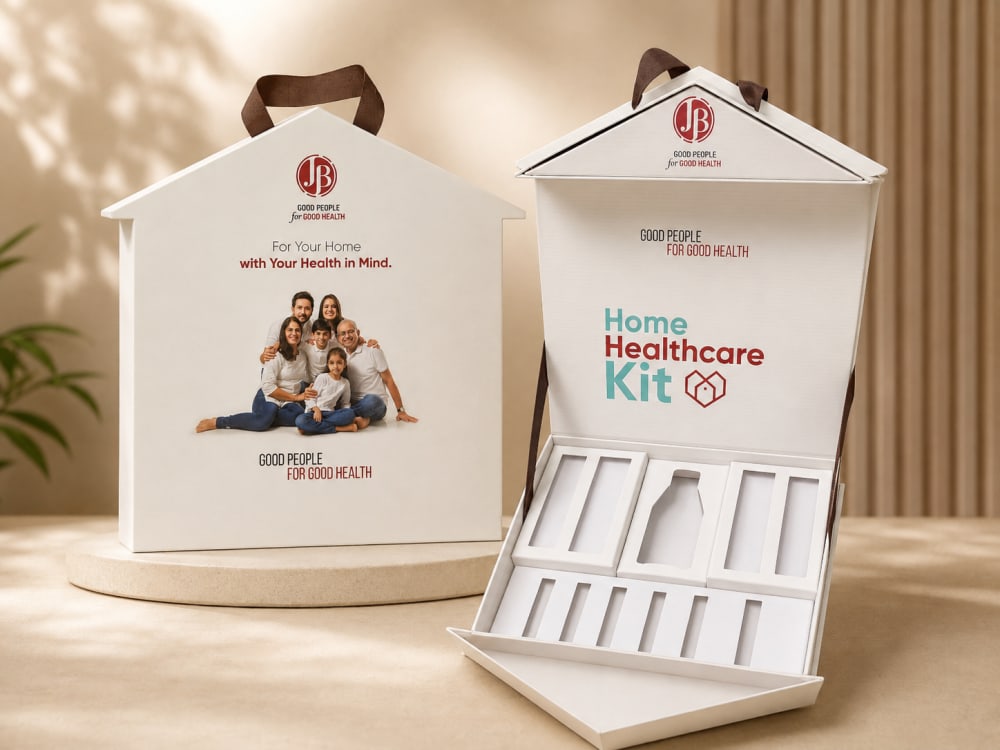 View this project →
Custom special packaging
Some products do not fit comfortably into a standard format. They may require an unusual shape, a distinctive reveal, a multi-part presentation, or a structure that combines packaging with communication.
A custom solution can be developed around those requirements from the beginning.
Storage should still influence the design
A memorable box still needs to work operationally.
Think about how empty packs will arrive, where they will be stored, how they will be assembled, and how finished units will be transported. A large or complex structure may create unnecessary storage and handling challenges if those factors are ignored early.
Collapsible structures, efficient nesting, flat-packed components, and carefully planned inserts can help balance presentation with practical storage.
The best packaging is not simply impressive when it is photographed. It should also be manageable during production, packing, storage, delivery, and customer use.
- 01Launch kits
- 02Corporate gifting
- 03Multi-product sets
- 04E-commerce packaging
- 05Seasonal collections
- 06Retail replenishment
- 07Products with multiple variants
Finishing should support the structure
Finishes are most effective when they reinforce the packaging idea.
Foil, embossing, lamination, textured papers, soft-touch surfaces, spot effects, and special print treatments can all contribute to a premium impression. But the finish should be selected with the product, structure, and handling requirements in mind.
A tactile finish may support a luxury or gifting product. A clean printed surface may be more appropriate for a technical range. A restrained use of foil may draw attention to a logo or key detail without overwhelming the pack.
Material and finish decisions should answer a clear question: what should the customer notice, feel, or understand when they first encounter the packaging?
The insert is part of the experience
The outside of the box creates the first impression, but the interior controls the reveal.
Paperboard, moulded paper, EVA foam, fabric lining, and other packaging accessories can be selected according to product protection and presentation needs.
- 01Keep the product secure
- 02Prevent surface damage
- 03Organise accessories
- 04Create a clear presentation order
- 05Make removal easy
- 06Support repeated opening and closing
- 07Add softness, contrast, or structure
A better product packaging brief
Before choosing a box, define the experience you want the customer to have.
At Synthesis Communications, we develop packaging around these practical and visual decisions together. Our work spans rigid boxes, folding cartons, premium printed collateral, inserts, finishes, and fully custom packaging structures.
The result should not be a complicated box for its own sake. It should be a packaging system that protects the product, fits the brand, works operationally, and leaves a lasting impression.
- 01What should the packaging communicate before it is opened?
- 02What does the customer need to notice first?
- 03How should the product be revealed?
- 04What must be protected during storage and transport?
- 05How many components need to be organised?
- 06Does the pack need to work for retail, gifting, shipping, or several contexts?
- 07What should make the packaging recognisably yours?
About this guidance
Packaging insight from Synthesis Communications.
Synthesis Communications is a Mumbai-based packaging company working across structural development, materials, print, finishes, sampling, and production. Learn about the company and its experience.
Continue from here
